Your to-do list is lying to you, and it's an arithmetic problem
The idea5 min read
A sorted list looks like a plan. It isn't one, and the difference is a sum nobody is doing.
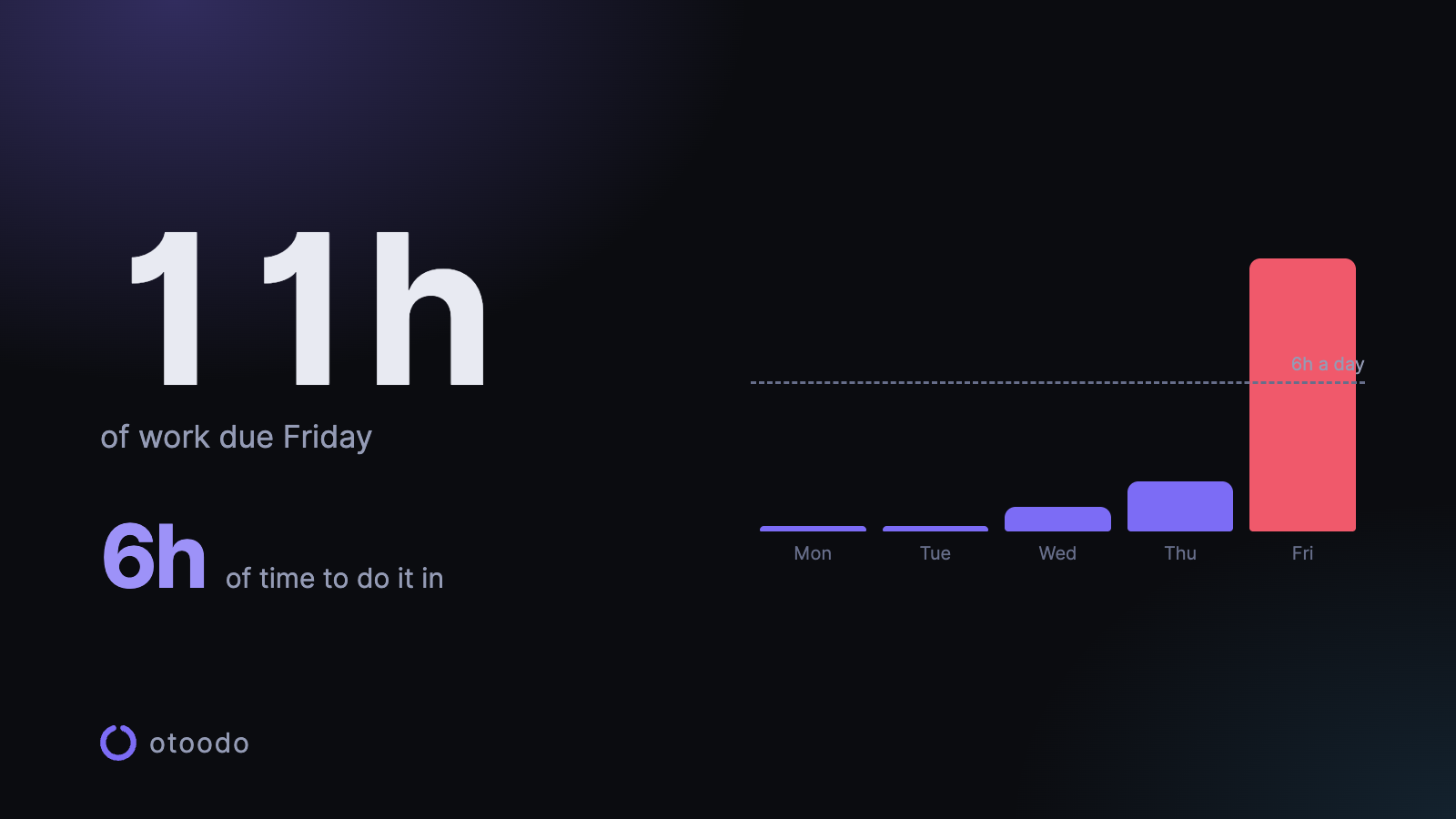
On Monday morning your list looks reasonable. Fourteen things, sorted by due date, the urgent ones flagged red. You have a plan.
You don't. You have an inventory.
The list can tell you what is outstanding and when each thing is due. It cannot tell you the one thing you actually need to know on a Monday morning, which is whether the fourteen things fit in the week you have. That is a sum, and no to-do app in wide use does it.
The sum nobody is doing
Here is the whole of it. Take the things due by Friday. Add up how long they will take. Now add up the hours you actually have between now and Friday — after the standing meetings, after the two hours a day that go somewhere you cannot account for.
If the first number is bigger than the second, Friday is already lost. Not "at risk". Lost. It was lost on Monday, and nothing about how hard you work between now and then will change it. The only three things that can change it are more hours, a later date, or less work.
Most people do a fuzzy version of this in their head, once, badly, on the morning it stops being fixable.
Why sorting feels like planning
Sorting is genuinely useful. It gets the right thing to the top. And because the right thing is at the top, the list feels like it has been thought about.
But sorting is order-preserving and quantity-blind. A list sorted by due date will cheerfully show you four things due Friday, each of them correctly at the top, without any opinion at all about whether four things due Friday is a sensible number of things to have due on Friday. It has no idea how long they take. In most tools you were never asked.
That is the gap. Your list knows when. It doesn't know how long, so it can't know whether.
| The question | A sorted list | The sum |
|---|---|---|
| What is outstanding? | Yes | Yes |
| When is each thing due? | Yes | Yes |
| How long will it take? | Never asked | Yes, roughly |
| Does it all fit the week? | Cannot know | Yes, in hours |
The flag that means nothing
Every to-do app has a priority field. High, medium, low. Red, orange, grey.
Ask what it actually does. In almost every case: it moves the item up the list. That's it. A priority flag is a manual sort key that you set, so it can only ever tell you back what you already told it. It cannot tell you that the high-priority thing needs six hours you do not have, because it does not know about hours and does not know about you.
Priority flags are a way of expressing anxiety about a task. They are not information about it.
What the arithmetic actually needs
Three numbers per task, and one about you:
- How long will it take? Roughly. Genuinely roughly — twenty per cent wrong is fine, and enormously better than nothing.
- When is it due?
- When can it start? Sometimes you're waiting on someone.
- How many focused hours does each of your days actually hold? Not how many hours you are at a desk. How many are yours.
That last one is the one people get wrong, and they get it wrong in the same direction every time. An eight-hour day does not contain eight hours of focused work. It contains four or five, on a good day, once meetings and email and the twenty minutes after each interruption have taken their share. Put eight in and every plan you make will be a fifth too optimistic, forever.
Put those four numbers in and the sum falls out. What has to happen today for everything to land. Which deadline is already impossible, and by how many hours. Which day next month is quietly overloaded, visible now rather than on the morning it arrives.
Why cramming isn't the answer either
The obvious fix — a planner that fills every day to the brim, earliest deadline first — is worse than the list.
Do that and work due in three months lands on today's list, because there was room and it had to go somewhere. You open the app, see nineteen items, and stop believing it. A plan you cannot finish is not a plan; it is a second source of guilt with better typography.
The useful question is much narrower: what do I need to touch today so that everything still lands on time? Answering that means spreading work across the days available to it, not stacking it at the front. A ten-hour task with ten working days left asks for about an hour a day. It asks for more only as its deadline closes in and the arithmetic starts to bite. How that spreading works is a post of its own.
Do that and today's list is short, honest, and finishable — and finishing it genuinely means everything is still on track, which is the only thing that makes a list worth trusting.
The part nobody wants
There is one more thing an honest planner does that a list never will: it tells you when the answer is no.
That is uncomfortable, and it is the entire value. Finding out on Monday that Friday needs eleven hours and you have six gives you four days to move a date, cut a scope, or ask for help. Finding out on Friday afternoon gives you an apology to write.
5 hours short.
Most tools avoid saying this because it feels unhelpful. It is the most helpful thing software can do for someone who commits to dates for a living.
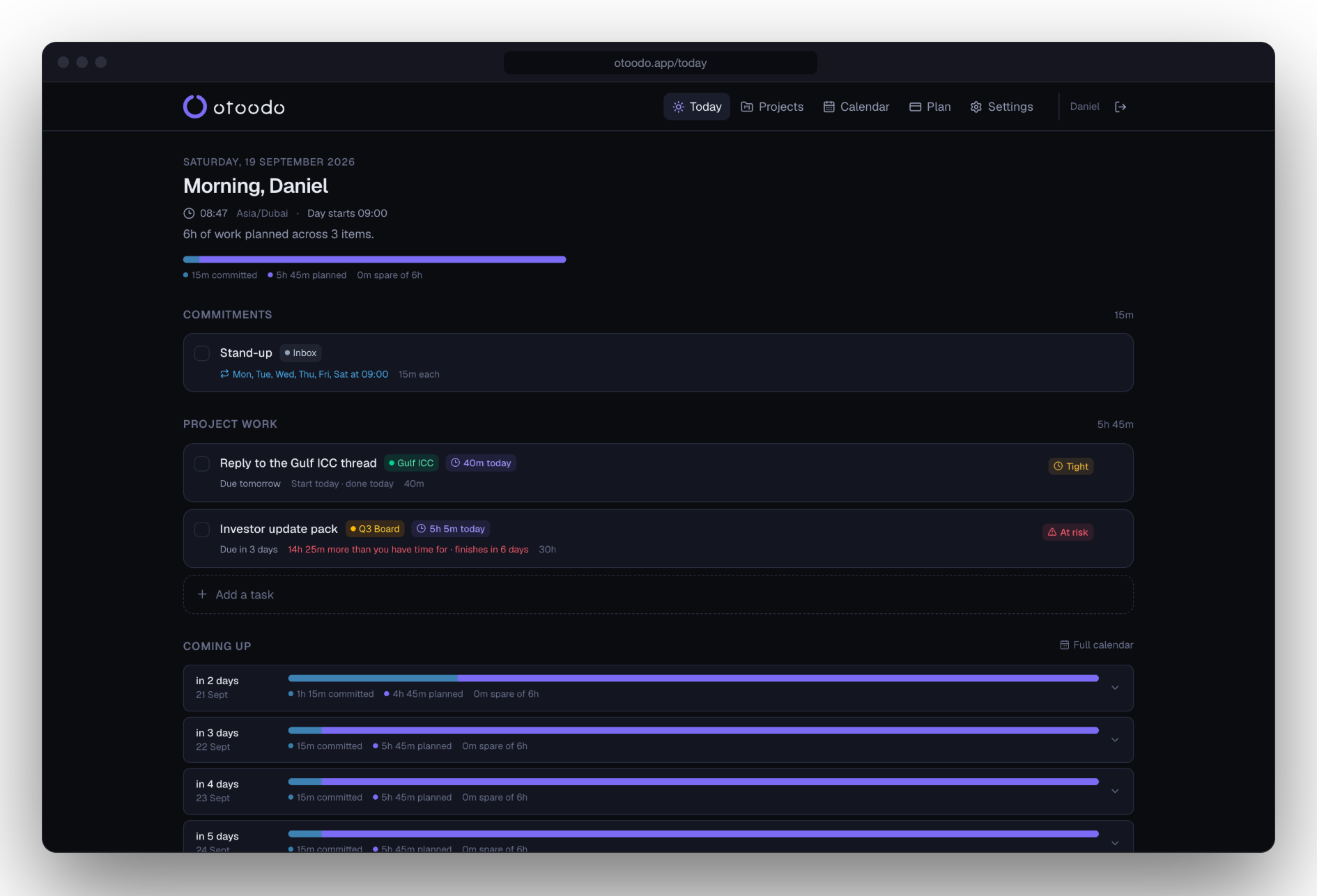
otoodo does this arithmetic. You tell it what needs doing, when it's due, and roughly how long it'll take; it works out what today has to contain, and tells you in hours when a deadline is already impossible. Fourteen days free, no card.