A to-do list with deadlines still cannot tell you if you will meet them
to-do list app with deadlines5 min read
A to-do list app with deadlines may look sufficient, but it can mislead you about your workload. Discover how to truly assess your deadlines.
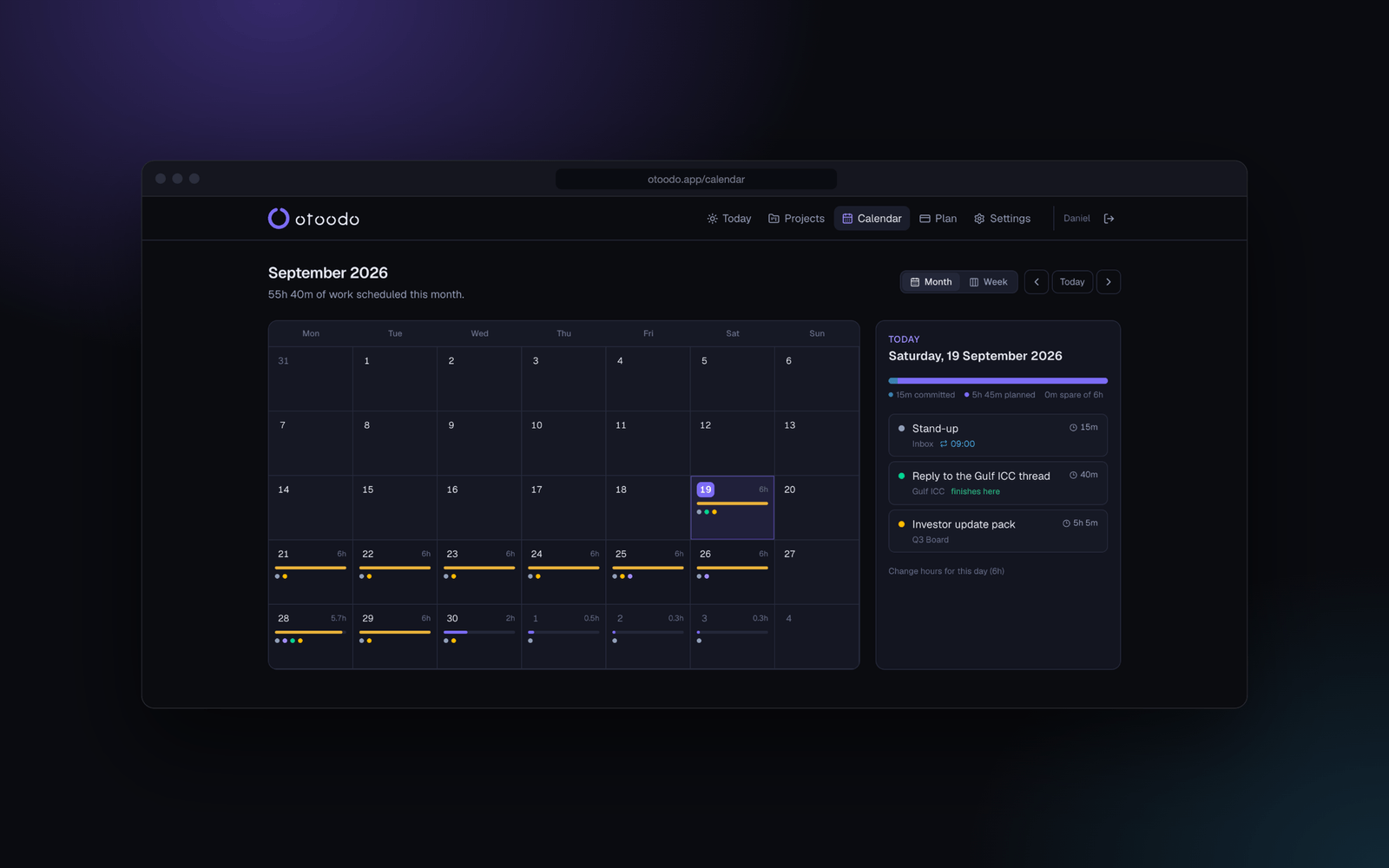
Many people rely on a to-do list app with deadlines to manage their tasks and commitments. However, just because you have a list of tasks with due dates doesn’t mean you can meet those deadlines. The reality is that due dates are merely labels, not a plan. This post will explore why a simple to-do list can lead you astray and how a more sophisticated approach can provide clarity.
The short version
- A to-do list with deadlines does not account for capacity.
- Deadlines can mislead you about what you can realistically achieve.
- A clear plan requires understanding your available hours and workload.
- Tools like otoodo can help you accurately assess your deadlines.
Understanding the limitations of a to-do list
A typical to-do list app allows you to input tasks and assign due dates. While this seems functional, it fails to address the most critical aspect of task management: your available capacity. An ordinary list might include tasks like:
- Client Proposal - Due: September 20, Estimated Time: 4 hours
Example: A week’s workload
Let’s break down a hypothetical scenario where you have a five-day workweek, with the following available hours:
- Monday: 6 hours
- Tuesday: 6 hours
Total Estimated Time Required
The reality of overlapping commitments
Let’s consider that you have recurring commitments that take up 20 hours of your week, leaving you with only 10 hours available for the tasks listed above. Here’s how that breaks down:
- Total Available Hours: 30 hours
- Recurring Commitments: 20 hours
- Remaining Hours for Tasks: 10 hours
Now, if you need to complete 14 hours of tasks but only have 10 hours available, you are . This is where a simple to-do list fails you. The list does not inform you that you are overcommitted, nor does it provide a solution for managing the workload effectively.
Why deadlines alone aren’t enough
Deadlines are often misleading. They create an illusion of control and urgency, but without a clear understanding of your capacity, they can lead to missed deadlines and increased stress. Here are some reasons why relying solely on deadlines is detrimental:
- Lack of context: Deadlines do not consider the time you need for breaks, unexpected tasks, or personal commitments.
- Overcommitment: You may think you can handle more tasks than you realistically can, leading to burnout and frustration.
- Inflexibility: A rigid deadline does not account for the dynamic nature of work, where priorities can shift unexpectedly.
The arithmetic of planning
To truly understand whether you can meet your deadlines, you need to engage in a form of arithmetic planning. This involves calculating your available hours and assessing your workload against those hours. It’s about understanding the relationship between the tasks, deadlines, and your capacity.
The three levers of planning
- More hours: Can you extend your work hours to accommodate additional tasks?
- Later dates: Is it possible to push deadlines back to give you more time?
- Less work: Can you delegate or eliminate tasks to fit your workload?
These levers are crucial in managing your commitments effectively. By adjusting one or more of them, you can create a more realistic plan that aligns with your actual capacity.
The role of otoodo in planning
Unlike a traditional to-do list app, otoodo offers a deadline-aware task planner that calculates your available hours and helps you understand what today must contain to meet your deadlines. It does the arithmetic for you, ensuring that you are aware of any shortfalls well in advance. Here’s how otoodo can help:
- Capacity-aware planning: It considers your working hours and recurring commitments to give you an accurate picture of your workload.
- Task prioritisation: By knowing what today must contain, you can focus on the most critical tasks first.
- Feasibility checks: If a task cannot be completed by its deadline, otoodo will inform you of the shortfall in hours, allowing you to adjust your plan accordingly.
The importance of estimates
One common objection to using a more structured approach is the reluctance to estimate how long tasks will take. Many people find estimating daunting, fearing they will be inaccurate. However, in otoodo, rough estimates are sufficient. Tasks default to one hour, and even a basic estimate can help you understand your workload better.
The cost of not estimating
Without estimates, you risk:
- Underestimating your workload: This leads to overcommitment and missed deadlines.
- Failing to allocate time effectively: You might spend too much time on less important tasks.
- Inability to communicate with clients: When you cannot provide a clear picture of your workload, it becomes difficult to manage client expectations.
Conclusion
A to-do list app with deadlines may seem functional, but it can mislead you about your capabilities. Deadlines are just labels; they do not provide a plan. By understanding your available hours and workload, you can create a more realistic approach to task management. Tools like otoodo can help you accurately assess your deadlines and avoid the pitfalls of traditional to-do lists.
Fourteen days free, no card. Start now.