Time Blocking vs To-Do List: Why Both Fail in Opposite Directions
time blocking vs to-do list5 min read
Explore the limitations of time blocking and to-do lists, and discover a balanced approach to managing your tasks effectively.
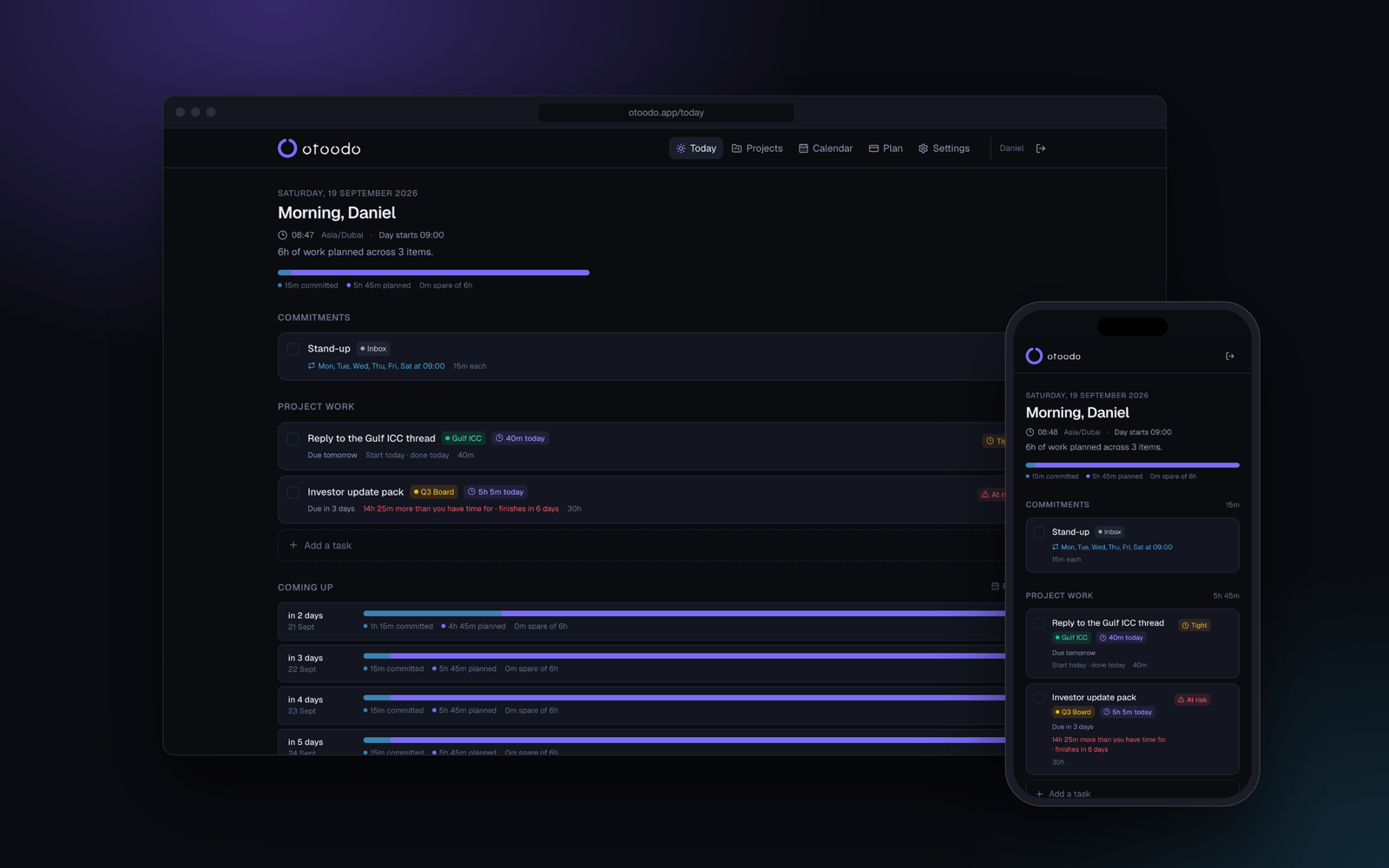
Managing your workload effectively is a challenge many face. Two popular methods, time blocking and to-do lists, often fall short in different ways. Time blocking is rigid and can crumble under the slightest interruption, while a to-do list is flexible but often fails to provide a realistic view of what can be accomplished. Understanding the strengths and weaknesses of both approaches is crucial for effective task management.
The short version
- Time blocking can break easily with interruptions, leading to inefficiency.
- To-do lists offer flexibility but lack accountability for deadlines.
- A balanced approach involves setting daily quotas of hours per task.
- Using a tool like otoodo can help plan tasks against available hours, ensuring deadlines are met.
Understanding Time Blocking
Time blocking is a method where you allocate specific blocks of time to work on particular tasks. This approach can help you focus on one task at a time, reducing distractions. However, it has its pitfalls:
- Rigidity: Once you set a time block, any unexpected interruption—like a phone call or an urgent email—can derail your entire schedule. You may find yourself scrambling to catch up, leading to frustration and decreased productivity.
- False Sense of Accomplishment: Completing a time block does not guarantee that you made significant progress on your tasks. If the task was too ambitious for the time allotted, you may end up feeling defeated.
The Flexibility of To-Do Lists
On the other hand, to-do lists are inherently flexible. They allow you to add, remove, and rearrange tasks as needed. However, this flexibility comes with its own set of challenges:
- Lack of Structure: Without a clear plan, it’s easy to become overwhelmed by the sheer number of tasks. You may find yourself prioritising tasks based on urgency rather than importance, which can lead to missed deadlines.
- Promises Nothing: A to-do list does not provide any assurance that you will complete your tasks. It merely serves as a reminder of what needs to be done, which can lead to procrastination.
The Middle Ground: Daily Quotas of Hours
Instead of choosing between time blocking and to-do lists, consider a middle-ground approach. This involves setting a daily quota of hours for each task based on your realistic workload. Here’s how you can implement this:
Worked Example: Balancing Tasks with Time
Let’s consider a practical example to illustrate how to balance tasks with a daily quota approach. Suppose you have the following tasks due this week:
Limitations of the Middle Ground
While this balanced approach can significantly improve your task management, it’s not without its challenges:
- Estimation Errors: Estimating how long tasks will take can be tricky. If your estimates are off, you may find yourself short on time.
- Unforeseen Interruptions: Just like with time blocking, unexpected events can disrupt your schedule. It’s essential to build in buffer time for these instances.
- Discipline Required: This method requires a level of discipline to stick to your allocated hours. If you find yourself distracted, it may be challenging to adhere to your plan.
The Role of Technology in Task Management
To enhance your task management process, consider using a productivity tool like otoodo. otoodo is a deadline-aware task planner that does the arithmetic for you. Here’s how it can help:
- Capacity Awareness: otoodo knows how many focused hours you have each day and can help you plan your tasks accordingly.
- Deadline Management: It computes what today must contain for everything to land on time, helping you avoid last-minute scrambles.
- : You can assign tasks based on your estimates and available hours, ensuring a realistic approach to your workload.
Conclusion
In conclusion, both time blocking and to-do lists have their strengths and weaknesses. Time blocking can easily break under interruptions, while to-do lists often lack accountability. By setting daily quotas of hours for each task, you can create a balanced approach that combines the best of both worlds. This method not only helps you stay organised but also ensures that you meet your deadlines.
To further enhance your productivity, consider using otoodo, the planner that does the arithmetic for you. With features that help you manage your tasks against your available hours, you can finally take control of your workload. Fourteen days free, no card. Sign up here.