Too much work and not enough time is a number. Find it first
too much work not enough time5 min read
Learn how to calculate the hours you need for upcoming tasks and identify gaps in your schedule with otoodo's deadline-aware planning.
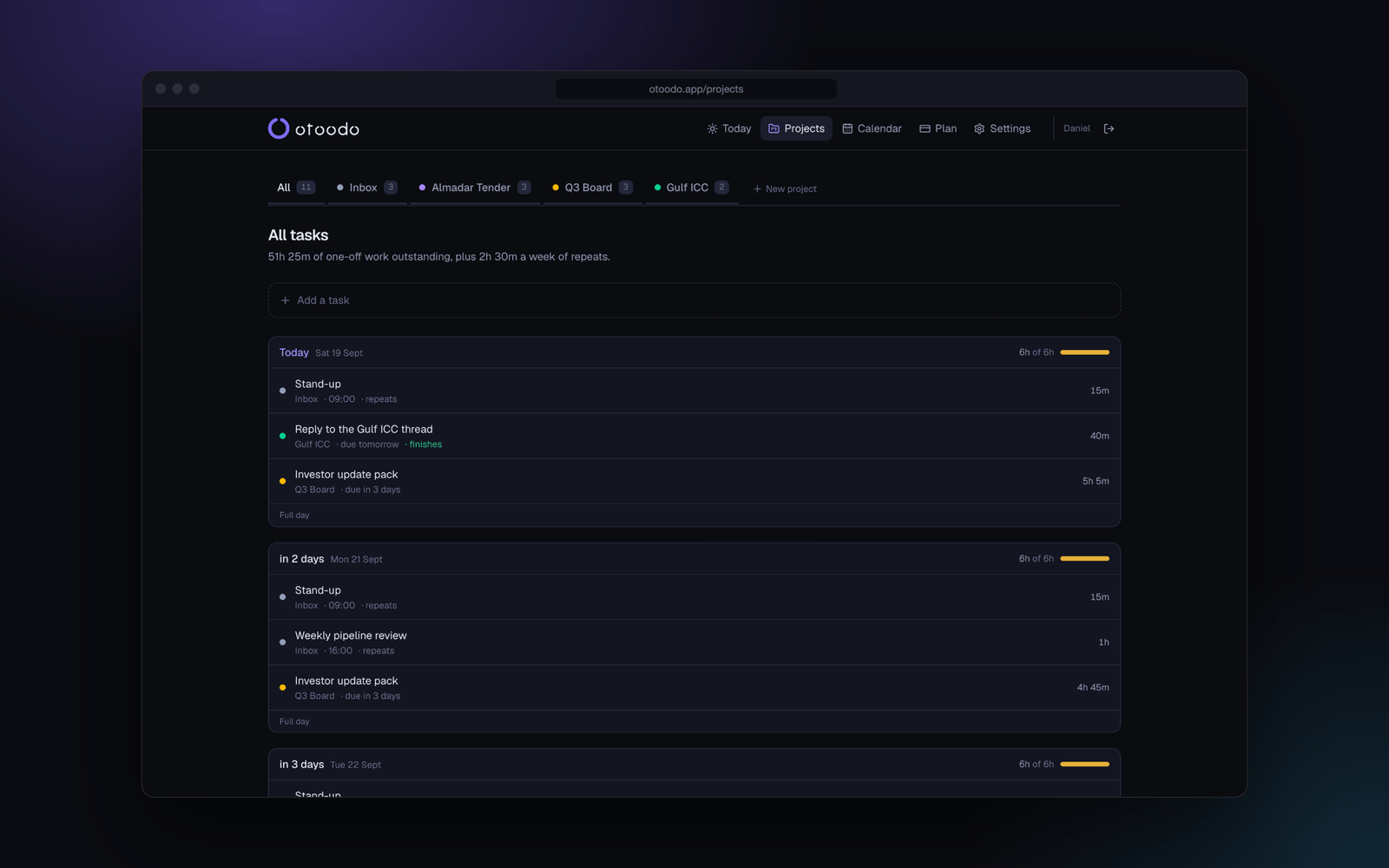
In the fast-paced world of consulting and project management, the phrase "too much work and not enough time" often rings true. It’s a common scenario: you have deadlines looming, tasks piling up, and the hours in the day just don’t seem to match the workload. The first step to tackling this problem is quantifying it. By adding up the hours due in the next ten working days against the hours you have available, you can identify whether you need to brace for long evenings or prepare for a difficult conversation about deadlines.
The short version
- Assess your workload by calculating the total hours required for tasks due in the next ten working days.
- Compare this total with the hours you have available to work.
- The gap between these numbers will indicate whether you need to adjust your schedule or communicate with clients.
- Use otoodo to manage your tasks efficiently and understand your workload better.
Understanding Your Workload
To manage your time effectively, start by listing all tasks that need to be completed in the next ten working days. For each task, estimate how long it will take to complete. This is where the arithmetic comes into play. Let’s break down how to calculate your workload with a practical example.
Example Calculation
Suppose you have the following tasks due over the next ten working days:
What If You Have a Shortfall?
Now, let's consider a scenario where the total estimated hours exceed your available hours. Suppose your tasks are as follows:
The Arithmetic of Planning
The arithmetic involved in planning is straightforward, but it requires honesty about your estimates. Tasks often take longer than anticipated, and unexpected issues can arise. Here are some tips for improving your estimates:
- Use Historical Data: Review past projects to see how long similar tasks took.
- Break Tasks Down: Smaller tasks can be easier to estimate accurately.
- Factor in Buffer Time: Always add a buffer for unexpected delays or complications.
The Role of otoodo in Workload Management
This is where otoodo can be invaluable. It’s not just a to-do list; it’s a deadline-aware task planner that does the arithmetic for you. By entering your tasks and their estimates, otoodo calculates what today must contain for everything to land on time. You can see at a glance whether you’re on track or if you need to make adjustments.
Setting Up Your Work Hours
In otoodo, you can set working hours per weekday, allowing the planner to account for your availability accurately. You can also input recurring commitments, which will be subtracted from your available hours first. This ensures that your planning reflects your true capacity.
For example, if you have a recurring commitment that takes 2 hours each day, otoodo will automatically deduct this from your daily available hours.
Dealing with Overcommitment
If you find yourself consistently facing the issue of too much work and not enough time, it may be time to reassess your workload and commitments. Here are some strategies to consider:
- Learn to Say No: If you're already at capacity, it's essential to decline additional work.
- Delegate Tasks: If possible, delegate tasks to others. In otoodo, you can manage delegates without them needing to log in, making it easier to assign work.
- Review Your Processes: Sometimes, inefficient processes can lead to overcommitment. Take time to review how you work and identify areas for improvement.
The Importance of Communication
When faced with a shortfall, communication is key. Whether it’s with clients or team members, being upfront about your capacity can help manage expectations and prevent misunderstandings. Here’s a template for communicating with a client:
Subject: Update on Project Timeline
Dear [Client's Name],
I hope this message finds you well. I wanted to provide an update on the [Project Name]. After reviewing the current workload, I’ve determined that the original timeline may not be feasible due to [reason].
Conclusion
In conclusion, understanding the arithmetic behind your workload is essential for effective time management. By calculating the hours due against those available, you can make informed decisions about your commitments. Tools like otoodo can aid in this process, providing clarity on what needs to be done and when.
Take control of your workload today and see how otoodo can help you manage your tasks more effectively. Remember, you can start with fourteen days free, no card required. Sign up here.