When everything is urgent, prioritise by arithmetic, not by feeling
how to prioritise tasks when everything is urgent3 min read
Learn how to prioritise tasks effectively when everything feels urgent using arithmetic instead of gut feelings. Discover a structured approach.
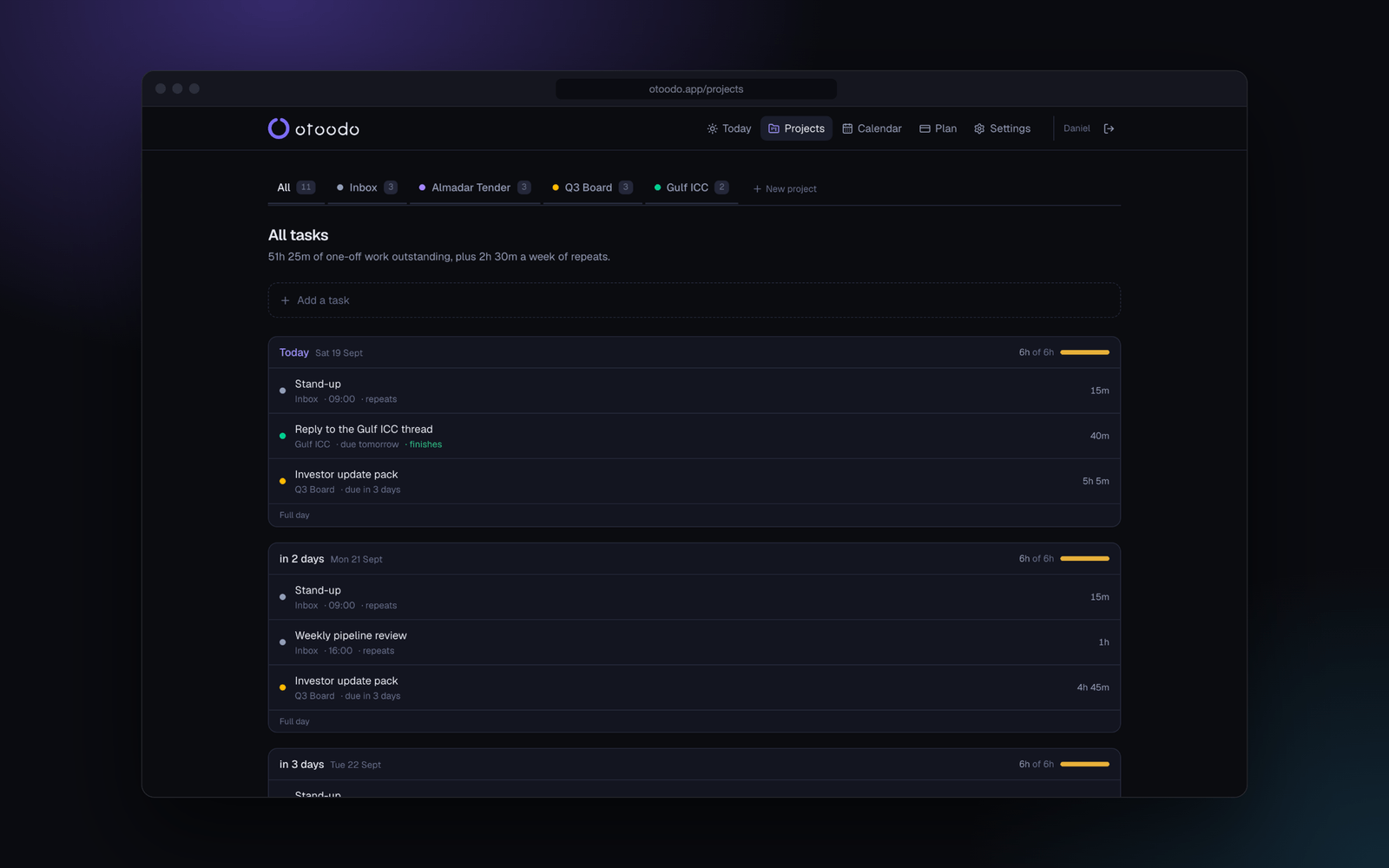
In a world where deadlines loom and tasks multiply, it can feel overwhelming to determine what should take precedence. You might find yourself scrambling to manage your time, prioritising tasks based on feelings rather than logic. However, there is a more effective way to approach this dilemma: by using arithmetic to assess your workload. This method allows you to see the true urgency of tasks based on the hours of work required versus the hours available until deadlines.
The short version
- Prioritising by arithmetic helps clarify which tasks are truly urgent.
- Calculate the urgency of each task by dividing hours of work by hours left.
- This method can reveal surprising insights into task order.
- Use tools like otoodo to automate and simplify this process.
To illustrate this point, let’s work through a practical example of four tasks, each with different deadlines and workloads. We will calculate their urgency and determine the order in which they should be tackled.
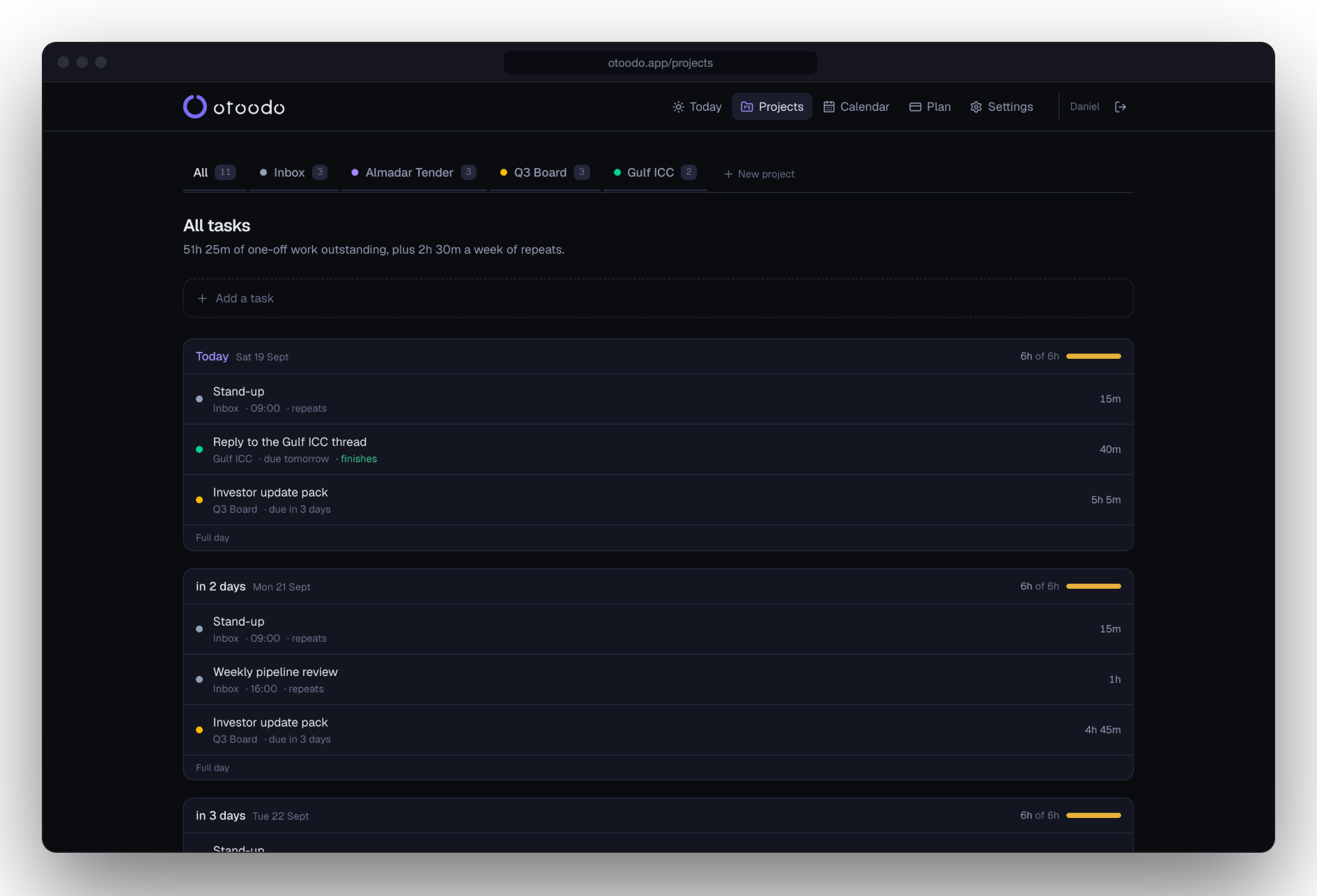
Example Tasks
Calculating Urgency
- Task A: 4 hours of work with 2 days left means you need to complete 2 hours of work per day.
- Task B: 6 hours of work with 3 days left also requires 2 hours of work per day.
- Task C: 8 hours of work over 4 days means 2 hours of work per day.
- Task D: 3 hours of work with only 1 day left means you need to complete 3 hours of work today.
From this calculation, it is clear that is the most urgent, as it requires the most work to be completed in the least amount of time. Following that, , , and all have the same urgency but can be completed in the next few days.
The Importance of Estimation
To make this method effective, you need to have a rough estimate of how long each task will take. While it may seem tedious to estimate every task, it doesn’t have to be a precise science. A rough estimate is sufficient for the arithmetic to be useful. For instance, if you believe a task will take about an hour, you can input that into your calculations.
Acknowledging the Limitations
While prioritising by arithmetic is a powerful tool, it is essential to acknowledge its limitations. Not every task can be easily quantified, and some may require more flexibility than others. Here are a few considerations:
- Estimates may be wrong: Your initial estimates might not always be accurate, leading to potential miscalculations in urgency.
- Some tasks can’t be spread: Certain tasks may need to be completed in one go, making it difficult to break them down into smaller portions.
- Different priorities: Some tasks may have a higher importance than their urgency suggests. For example, a client meeting may feel less urgent than a report but can be more critical for your business.
Conclusion
To sum up, when faced with a multitude of urgent tasks, it is beneficial to prioritise based on arithmetic rather than feelings. By calculating the urgency of tasks through a simple formula, you can gain clarity on what needs to be done first. This approach not only helps in managing your time effectively but also reduces the anxiety that comes with feeling overwhelmed.
Using a tool like otoodo can further streamline this process. With its deadline-aware task planning capabilities, otoodo helps you see what today must contain to meet your deadlines while providing insights into your workload. You can start free for 14 days, no card required. Fourteen days free, no card. Sign up here.