You Overcommit Because Yes is Free on the Day You Say It
how to stop overcommitting4 min read
Learn how to stop overcommitting by checking your available hours before saying yes to new tasks and deadlines.
Overcommitting is a common issue for many professionals. You might say yes to a new project or task because it seems manageable at the moment, but as deadlines loom, the reality of your workload becomes clear. Understanding how to stop overcommitting is crucial for maintaining productivity and ensuring that you meet your existing commitments without unnecessary stress.
The short version
- Saying yes to new tasks can lead to an overwhelming workload.
- Assess your available hours before agreeing to new commitments.
- Use a systematic approach to evaluate your capacity.
- Communicate clearly when you cannot take on more work.
Understanding Overcommitment
Overcommitment happens when you agree to more tasks than you can reasonably handle. This often stems from a desire to please others, fear of missing out, or simply a lack of awareness about your current workload. The initial excitement of new opportunities can cloud your judgment about the time and resources you have available.
The Cost of a Yes
When you say yes to a new task, the immediate gratification can feel rewarding. However, the true cost of that yes often reveals itself later. You might find yourself scrambling to meet deadlines, sacrificing quality, or even jeopardising your existing commitments. This can lead to a cycle of stress and burnout, which ultimately affects your productivity and well-being.
Assessing Your Available Hours
Before committing to any new task, it’s essential to assess your available hours. This involves a few key steps:
- Calculate Your Working Hours: Start by determining how many focused hours you have available each weekday. This should account for your regular commitments, such as meetings and recurring tasks.
The Arithmetic of Planning
To illustrate how to stop overcommitting, let’s look at a worked example. Suppose you have the following commitments over the next week:
Communicating Your Capacity
When you realise that you cannot take on additional work, communicating this effectively is crucial. Here’s a simple script you can use:
Subject: Regarding New Project Commitment
Hi [Name],
Thank you for considering me for this project. I appreciate the opportunity. However, after reviewing my current commitments, I realise I won’t be able to dedicate the time needed to ensure the quality of work you deserve.
I hope you understand, and I would love to collaborate on future projects when my schedule allows.
Best regards, [Your Name]
The Weakness of the Argument
While the arithmetic of planning is effective, it’s essential to acknowledge its limitations. Estimates can be inaccurate, and some tasks may take longer than anticipated. Moreover, some professionals thrive under pressure, and a little overcommitment can sometimes lead to increased productivity. However, this is not a sustainable strategy and can lead to burnout over time.
Strategies to Stop Overcommitting
To effectively manage your commitments, consider implementing these strategies:
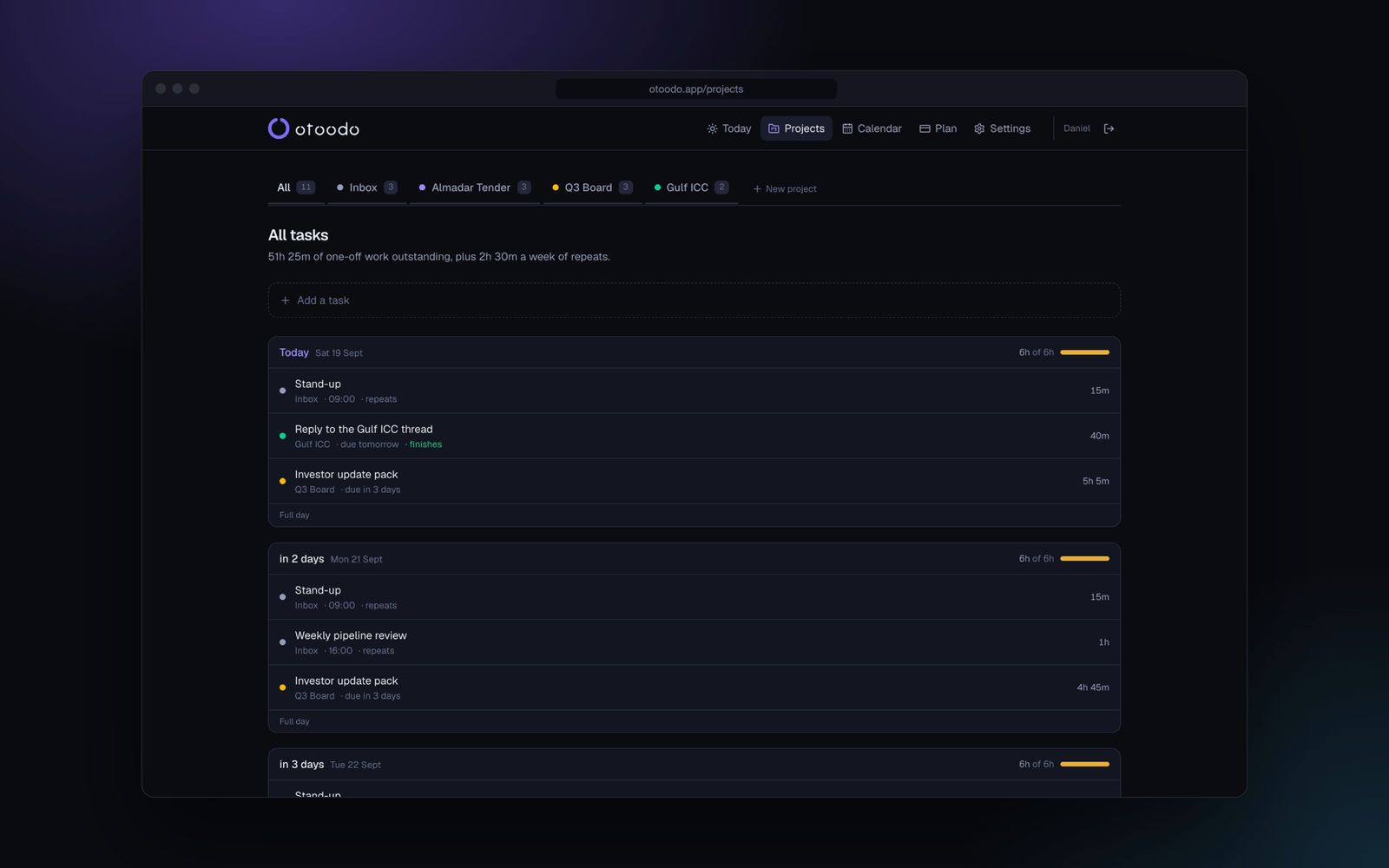
- Use a Task Planner: Tools like otoodo can help you visualise your tasks and deadlines, allowing you to make informed decisions about new commitments. It does the arithmetic for you, showing how much time you have available and what needs to be prioritised.
Using otoodo to Manage Your Workload
otoodo is a deadline-aware task planner that helps you manage your commitments effectively. By inputting your tasks, estimates, and deadlines, otoodo calculates your available hours and shows you what today must contain. This allows you to see at a glance whether you can take on additional work without overcommitting. Here’s a screenshot of what otoodo’s Today screen looks like:
With otoodo, you can avoid the pitfalls of overcommitting by ensuring you have a clear understanding of your workload and deadlines.
Conclusion
Overcommitting can lead to frustration and stress. By assessing your available hours before saying yes to new tasks, you can maintain control over your workload and ensure that you meet your existing deadlines. Use tools like otoodo to help you visualise your commitments and make informed decisions about new projects.
Fourteen days free, no card. Start now.